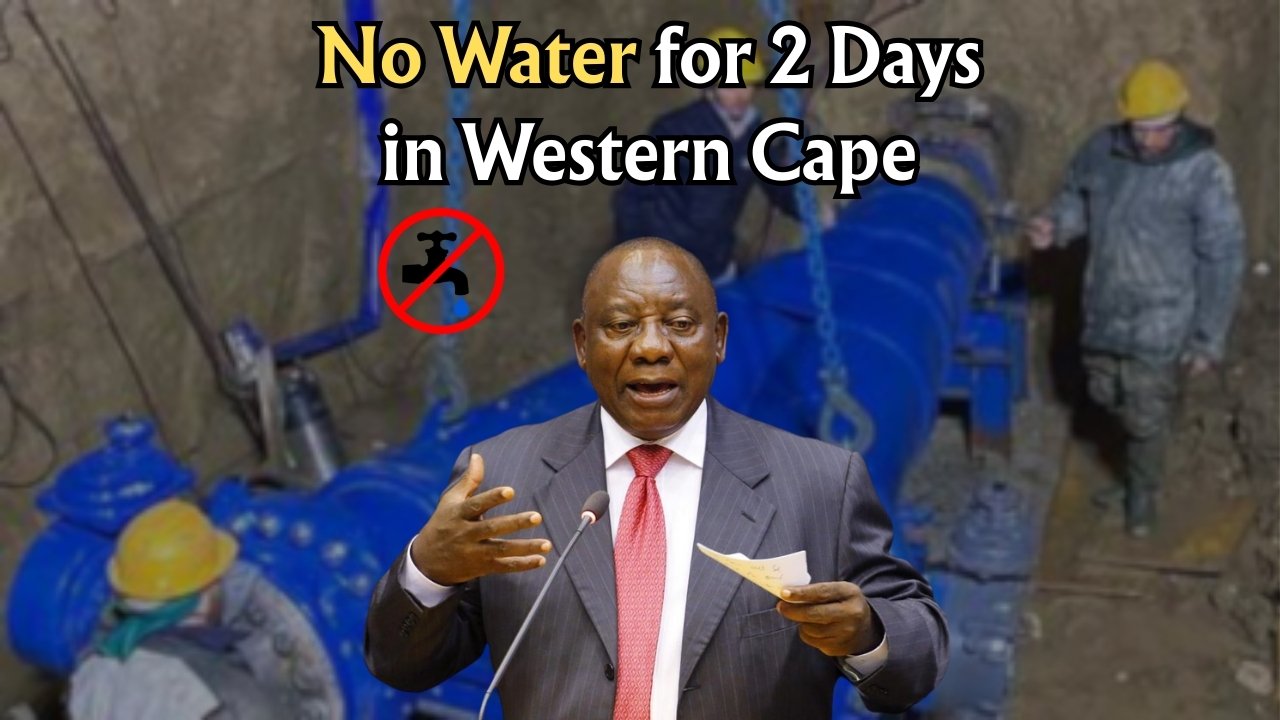
Water Cut in Western Cape : The Western Cape is bracing for a massive 48-hour water outage, following what government officials are calling a “system overload.” This sudden disruption has sparked concern among residents and businesses alike, especially as the region continues to battle post-drought recovery and infrastructure issues.
Authorities have promised updates and temporary solutions, but the immediate impact is undeniable, with hospitals, schools, and households rushing to make emergency plans.
Why Water Cut Was Announced: Understanding the System Overload
The Department of Water and Sanitation announced the water shutdown due to a critical system overload affecting the region’s main reservoirs and pipeline infrastructure. Engineers identified a spike in usage that pushed the already aging infrastructure beyond its limit, prompting a preventive shutdown to avoid long-term damage.
Key Reasons for the Water Cut:

- Sudden surge in water consumption
- Mechanical failures in key pumping stations
- Scheduled maintenance delayed due to funding issues
- Over-reliance on single-point water supply sources
- Effects of aging and overused infrastructure
Timeline of the Incident:
| Date | Event Description |
|---|---|
| April 21 | Early warnings issued about pressure fluctuations |
| April 22 | Minor outages reported in northern districts |
| April 23 | Full shutdown announced by Water Department |
| April 24 | System-wide inspection begins |
| April 25 | Scheduled repair and maintenance work |
| April 26 | Water services expected to gradually resume |
| April 27 | Full restoration if no additional issues arise |

Affected Areas and Populations
Approximately 1.5 million residents are expected to be affected by this 48-hour water cut. The government has released a detailed list of impacted municipalities, encouraging residents to store water and prepare for temporary disruptions.
Key Impact Zones:
| Municipality | Number of Affected Residents | Type of Area | Emergency Supply Points |
|---|---|---|---|
| Cape Town Central | 450,000 | Urban | 15 locations |
| Stellenbosch | 120,000 | Semi-Urban | 6 locations |
| Paarl | 85,000 | Urban | 4 locations |
| Worcester | 95,000 | Rural | 3 locations |
| Mossel Bay | 75,000 | Coastal Town | 5 locations |
| George | 105,000 | Urban | 7 locations |
| Knysna | 60,000 | Coastal & Rural | 2 locations |
| Malmesbury | 45,000 | Rural | 3 locations |
Emergency Response Plan by Authorities
To tackle the crisis, multiple departments have activated emergency response plans. Tankers, bottled water supplies, and temporary water stations are being distributed across affected districts.
Government Actions in Progress
- Deployment of 120+ water tankers across high-need zones
- Temporary water stations set up at schools, clinics, and community centers
- Emergency hotline activated for real-time updates
- Repair crews working around the clock to fast-track restoration
Community Guidelines During the Outage
- Boil water before use, especially if obtained from tankers or other temporary sources
- Limit water usage to essential needs only
- Refrain from using washing machines, dishwashers, and watering gardens
- Report leaks or illegal water tapping to local authorities immediately
How Businesses and Institutions Are Coping
Impact on Schools and Hospitals
- Schools in most affected areas have switched to remote learning during the outage
- Hospitals have activated backup water reserves and are being prioritized for tanker deliveries
- Sanitation and hygiene protocols have been intensified at public institutions
Business Continuity Measures
- Restaurants and cafes are relying on bottled water supplies
- Hotels and guesthouses are providing limited services to manage water use
- Industrial facilities have reduced operational hours or temporarily halted production
Long-Term Infrastructure Plans and Future Safeguards
Government officials have assured the public that long-term planning is underway to avoid similar crises in the future.
Planned Infrastructure Projects
- Upgrade of the main water pipeline by Q4 2025
- Expansion of desalination and water recycling plants
- Installation of smart meters and usage monitors
- Development of multi-source water systems to reduce reliance on a single supply
Projected Government Budget for 2025
| Project Category | Allocated Budget (ZAR Millions) |
|---|---|
| Pipeline Repairs & Expansion | 1,200 |
| Desalination Plants | 950 |
| Water Quality Monitoring | 400 |
| Public Awareness Campaigns | 150 |
| Emergency Tanker Fleet | 300 |
| Staff Training & Recruitment | 120 |
| Technology & Smart Meters | 280 |
Frequently Asked Questions (FAQs)
Q1: When exactly will the water supply be restored?
A: The department estimates full restoration by April 27, depending on maintenance progress.

Q2: Where can I collect emergency water during the outage?
A: Visit your nearest community center or school. A list is available on the official Department of Water and Sanitation website.
Q3: What should I do if I see a water leak or illegal connection?
A: Immediately contact your local municipal office or call the emergency hotline.
Q4: Will there be compensation for businesses affected by the cut?
A: The government is reviewing possible relief options for small businesses, details to be announced soon.
Q5: How can residents ensure their stored water remains safe to use?
A: Always store water in clean containers and boil before use if unsure of quality.
Key Contact Information
Department of Water and Sanitation – Western Cape Office
- Phone: 021 941 6000
- Emergency Hotline (24/7): 0860 101 100
- Email: [email protected]
- Website: www.dws.gov.za
Cape Town Municipal Water Services

- Phone: 0800 65 64 63
- Email: [email protected]
- Emergency Updates Portal: www.capetown.gov.za/wateralerts
While the 48-hour water outage is undoubtedly inconvenient and disruptive, it also serves as a stark reminder of the pressing need for sustainable infrastructure and responsible water use. The Western Cape government has taken immediate steps to minimize the impact, but long-term solutions are critical. For now, residents are urged to remain patient, stay informed, and make use of available resources.